
let’s get beyond donor centric fund-raising
Your supporters are 100% amazing. They need your love, understanding and appreciation more than ever. But they’re also not the heroes of your story.
The way we raise money has the power to inspire, engage, and mobilise people as a collective force for good. But many of the tactics, techniques and language that are often still seen as fundraising best practice, continue to support damaging stereotypes and assumptions about the communities we each serve. Bolstering systemic issues that cause many of the injustices the sector exists to help overcome.
At the heart of problem is the issue is power. Who has it and who doesn’t.
For decades, the supporter has been at the centre of each fundraising story and ask. Also known as donor- or supporter-centric fundraising. Sounds so right it can’t be wrong? But what started out simply as a desire to show supporters how important they are, has encouraged stories of helplessness, indignity and pity while chasing short-term financial targets. It’s not that every supporter’s role isn’t vital or inspiring. It’s just they’re not the only heroes of your story.
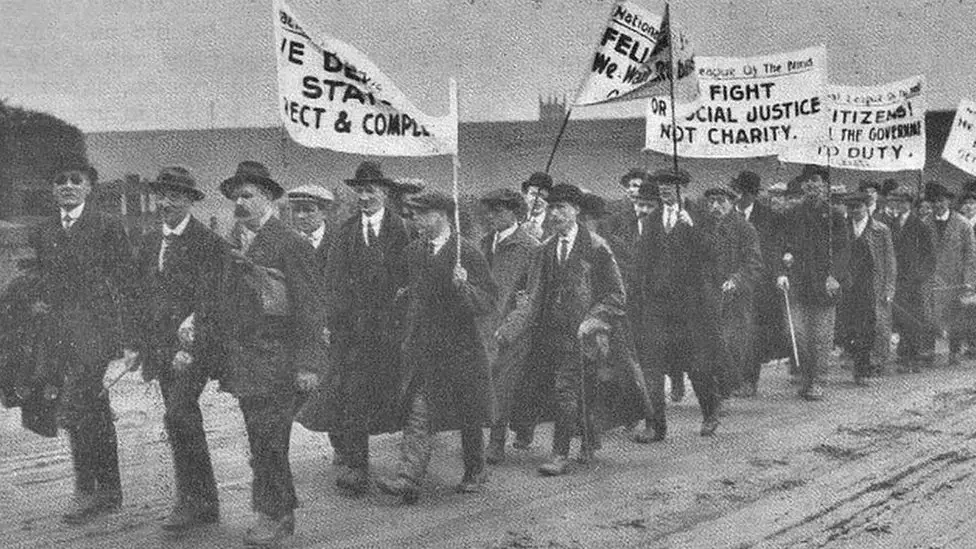
This idea, of a more just form of charity isn’t new. And conversations about representation are nothing new either. (See the “Piss on Pity” campaign to Block ITV’s Telethon ill-judged fundraising TV show in the 1990s. Or even further back the Blind Trade Unionists March in 1920s.)
But this is no longer about pioneering groups. It’s not some optional extra or nice to have. The disconnect between traditional approaches to charity story-telling and the modern values and beliefs of supporters, communities, service users and staff is real. And it’s growing.
Fundraising traditionalists might dismiss this thinking as wrong-headed or sector naval-gazing. (Ever heard something like “That’s all very nice but if you want the money, you need to stick with what works”.) But that’s to deeply misunderstand what’s at stake here.
To stay relevant, the sector needs a new guiding philosophy of giving: a radically different idea placed at the heart of charitable giving. One that re-defines donors as vital partners, not superheroes.
A really visible example of this tension between the old and new ways of fundraising right now is in international humanitarian aid and development, where the long overdue shift to decolonise is pushing INGOs to re-think how they ask for money. But they’re not the only ones. From cancer care to mental health many others are picking up where those pioneering trade unionists left off in demanding justice not charity.
One thing is clear to us: the “our supporters are the heroes” fundraising philosophy - the one that’s defined individual giving for decades - doesn’t have a future. But that doesn’t mean supporters aren’t amazing, vital and inspiring.
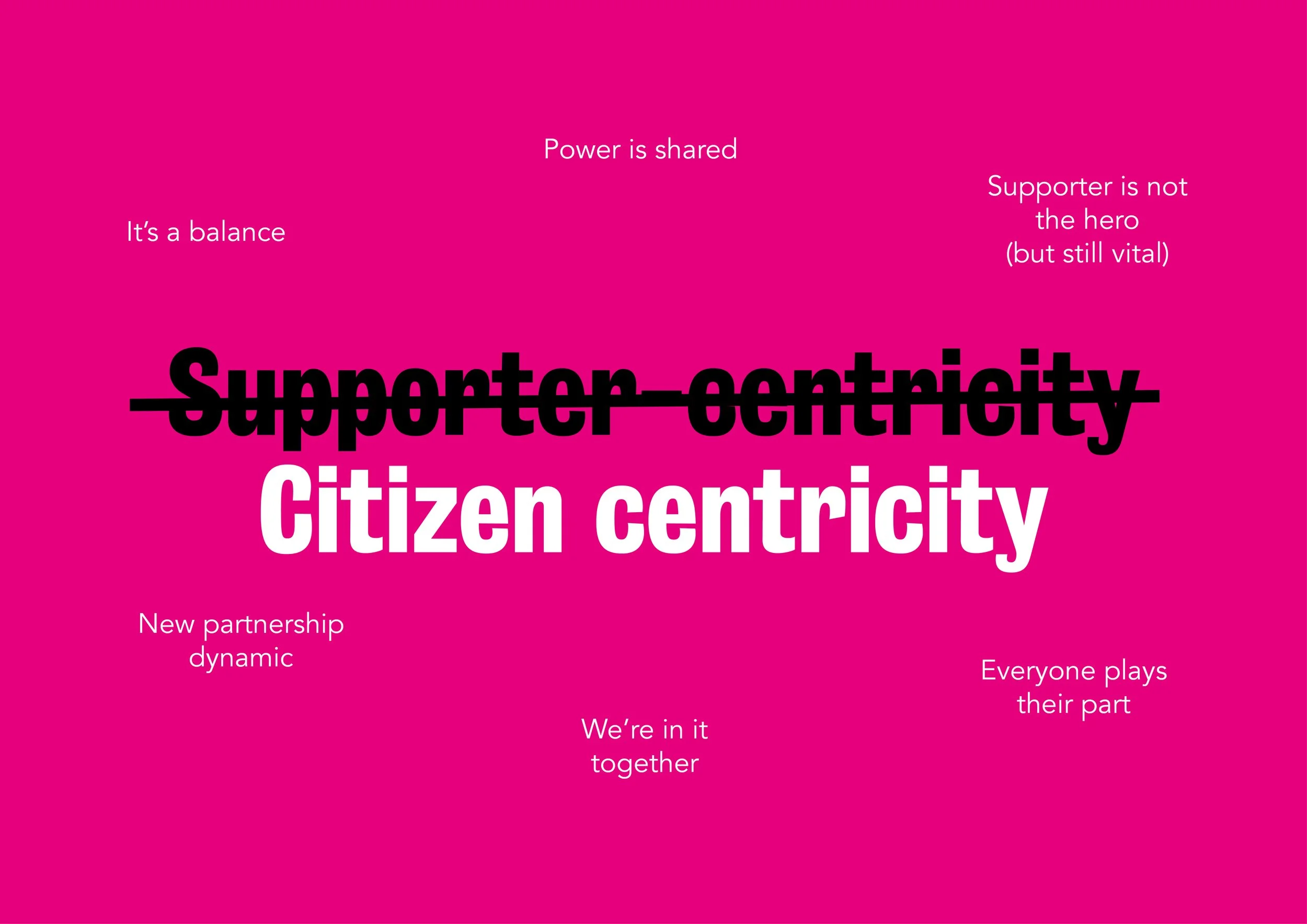
At Optimist, we’ve been partnering with charities to put a more equitable power dynamic at the heart of their fundraising activities. One based on shared beliefs, values and power that leaves behind 'donor centricity' as the driving philosophy for fundraising and instead, shifts the centre of gravity of fundraising strategies towards shared beliefs, values and objectives - the ones that all members of your organisation’s community have in common.
We’ve been calling it citizen-centric fundraising*. For us, this idea sums up a new kind of charity power dynamic.
It’s about equal participation in solving the world’s problems: the communities you work for, your frontline staff, volunteers and supporters all playing their part in the future they want to see. Sharing and shift the power we each hold to work for the common good together. It’s about making the world we want to see, not as individuals, but as a community of active citizens.
Making this shift isn’t simple. And we’re definitely not saying we’ve got all the answers. But we’re convinced that your community, supporters, service-users, staff and partners do. And sticking solely with the past, doesn’t have a future.
Let us know what you think. hello@optimist.works
Useful links and thinking…
The ‘Community-Centric Fundraising’ Movement: a more recent discovery for us is the powerful and inspiring work of the movement for community-centric fundraising which has been building since 2015! Lots in here to get stuck into here but we’d recommend starting with their ten principles: https://communitycentricfundraising.org/ccf-principles/
Jon Alexander
Brilliant thinking around the “citizen shift” and how communities not institutions hold the power to change the world. Find out more at: https://jonalexander.net/
Optimist Works x Oxfam International:
See how getting beyond donor centricity led our approach to developing a new fundraising proposition for Oxfam International:
https://www.optimist.works/works/oxfaminternational